


Style
Type
Still
Winemaker
Julien Ferran
Appellation
Bordeaux Superieur
Varieties
Cabernet Franc, Cabernet Sauvignon, Merlot
Viticulture
Château Ferran uses only biodynamic farming techniques. Ungulate manure is buried in the soils at different full moon periods throughout the year for a properly balanced vineyard. The vines are usually trimmed in the ‘guyot’ style and once ripe, the grapes are harvested manually. As a Demeter certified estate, pesticides or herbicides are not used and fungicide treatments consist of nettle and chamomile sprays that are made in house. Vineyard yields are inferior to 38Hl per hectare and much of the inter row soil work is carried out by horse and manual labor.
Farming
Certified Biodynamic and Certified Organic
Terroir
Château Ferran is located on the Haut Benauge plateau in the Entre Deux Mers and Bordeaux Supérieur appellations. The soils are mostly made up of clay and limestone mixed with marl and iron-laden sub-structures. The vineyards are for the most part gently sloping towards the Saint Pierre de Bat stream that borders the estate and its neighboring village. The vineyards lie in a relatively high elevation for the region, as they are between 40 and 60 meters above sea level, which results in cooler temperatures during the summer, much needed for the fruit / acidity balance of the grapes.
Vineyard
Château Ferran is located on the Haut Benauge plateau in the Entre Deux Mers and Bordeaux Supérieur appellations. The soils are mostly made up of clay and limestone mixed with marl and iron-laden sub-structures. The vineyards are for the most part gently sloping towards the Saint Pierre de Bat stream that borders the estate and its neighboring village. The vineyards lie in a relatively high elevation for the region, as they are between 40 and 60 meters above sea level, which results in cooler temperatures during the summer, much needed for the fruit / acidity balance of the grapes.
Vinification
60% Merlot, 30% Cabernet Franc, 10% Cabernet Sauvignon. At least three weeks of maceration time, stainless steel and concrete vats, spontaneous fermentations with wild yeasts, with temperature-controlled fermentations (not above 20 degrees Celsius). Longer vinification for the reds results in fewer lees. Regular pigeage and batonnage reduce the lees so they mostly dissolve or turn into sediment before bottling. Fining is sometimes carried out with clay-based methods although this process is very rare.
Aging
20% of the vinified juice is aged in small oak barriques (mix of old and new) while the rest is aged in concrete or steel tanks (both for 6 to 8 months). Bottling is done with a minimal sulphur dose to ensure proper conservation during transport (very necessary for international shipping). 45 mg / btl max (usually much less).
Available Sizes (L)
0.750
Distribution Area
Delaware, New Jersey, New York, and Pennsylvania
Shelf Talkers
- Chateau Ferran Saint Pierre Tradition Rouge-ST
- Chateau Ferran Saint Pierre Tradition Rouge NV-ST (Dan)
Tech Sheets
Offerings from Ferran Saint Pierre
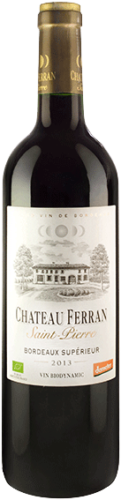
Bordeaux Superieur ‘Tradition’
2 Commerce Dr. Suite 3 Moorestown, NJ 08057
Office 800.245.0184
Fax 856.985.5848


