


Owner
Peio Espil
Winemaker
Peio Espil took over the family domaine in 1988 after working at La Tour Blanche (Sauternes) and Domaine Cauhapé (Jurançon).
Appellation
Irouleguy AOC
Distribution Area
Delaware, New Jersey, New York, and Pennsylvania
Varieties
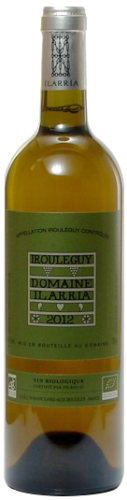
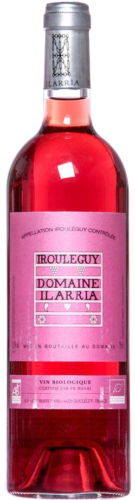
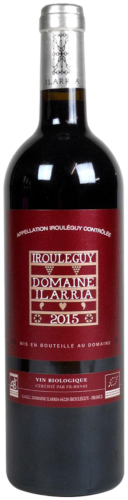
Cabernet Franc, Cabernet Sauvignon, Petit Courbu, Petit Manseng, Tannat
Vineyard
Irouleguy, a small appellation located in the Basque foothills of the Pyrenées in the extreme southwest corner of France, has long been dominated by the cooperative, producing 85% of the wine of the 175 hectare appellation. Over the past decade, a number of vignerons have left the co-op to produce their own wine. Today, there are 11 independent vignerons in Irouleguy. Domaine Ilarria has 10 hectares near the village of Irouleguy, less than 10 km from the border with Spain. The vines are mostly 20-40 years old, though some vines have reached 60 years of age. With most of the vineyards on very steep gradients of up to 60%, everything must be done by hand in these vineyards.
Farming
Organic


About Domaine Ilarria
Located in the heart of the village of Irouleguy, this domaine has been in the Peio Espil family for several centuries. Ilarria, an old village house, derives its name from a moorland site: “Iri” meaning site, and “larria” meaning moors. The property spans 30 hectares, with 10 hectares dedicated to vineyards.
In the Basque Country, singularity and identity hold significant meaning. Inspired by the principles of Japanese microbiologist Masanobu Fukuoka, the Espil family works harmoniously with nature rather than against it. Committed to preserving the tradition of the house while respecting the environment, the vineyards have been certified organic for 15 years, emphasizing limited human intervention and minimal use of machinery.
All fermentations are carried out using indigenous yeasts and bacteria. There is no chaptalization, deacidification, or any other chemical or technological methods that could alter the original product. The addition of sulfites is minimal or entirely absent. The resulting wines are fleshy, profound, and expressive, achieving a level of quality that serves as a stylistic benchmark, encouraging vignerons from outside of Irouleguy to reflect on their own practices.

2 Commerce Dr. Suite 3 Moorestown, NJ 08057
Office 800.245.0184
Fax 856.985.5848


