


2022
Rioja thrives on tradition, on an image of immutability. There’s some truth to this perception. Many of the region’s wines are made in pretty much the same way today as they were in the 1970s, give or take the incontrovertible influence of climate change. Rioja is very good at producing large volumes of reliably drinkable wine: supple, perfumed, sweetly oaked with immediate appeal but enough acidity to age. Yet Rioja is also capable of rapid change. It happened in the boom years of the second half of the 19th century, when merchants from Bordeaux came to Spain looking for wine to replace what they’d lost in their phylloxera-ravaged region; it happened in the 1990s as a response to demand for the bigger, bolder, more concentrated wines that were in vogue in the US and elsewhere; and it’s happening again right now. It’s not widely appreciated, but Rioja is making the greatest reds and whites in its history. Many people believe that the pan-regional model, blending grapes and vineyards across a vast area, has always been dominant, but the opposite is true. There was a time when Rioja talked about vineyards, villages and soil types, and that’s increasingly so once more. This piece focuses on seven of the region’s rising stars, some better known than others. I could easily have written about another 20, many of them young winemakers who have taken over from their parents or set up on their own using grapes purchased from growers. They are all part of the ‘new Rioja’, but they are also descendants of an older tradition. In their way, they are every bit as focused on terroir, on expressing the unique properties of their sites, as are great producers in Burgundy and Piedmont. That, increasingly, is the company in which they belong.
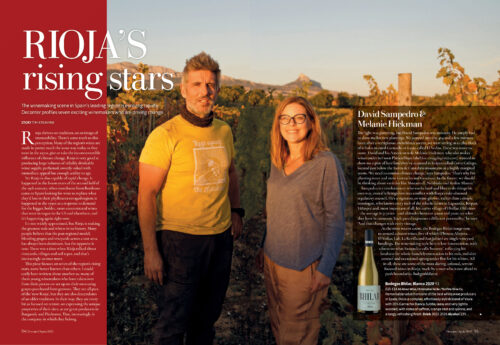
David Sampedro & Melanie Hickman
The light was guttering, but David Sampedro was insistent. He simply had to show me his new plantings. We jumped into the 4×4 and a few minutes later, after a vertiginous, switchback ascent, we were sitting in a 1.2ha block of echalas-trained Garnacha at 650m called El Vedao. There was more to come. David and his American wife Melanie Hickman, who also makes wines under her own Phinca Hapa label (see strugglingvines.com), wanted to show me a plot of bare land they’ve acquired in Kripan called Cerro Gallego, located just below the Sierra de Cantabria mountains at a highly marginal 900m. ‘We need to combat climate change,’ says Sampedro. ‘That’s why I’m, planting more and more Garnacha and Graciano. In the future, we should be thinking about varieties like Monastrell, Nebbiolo and Rufete Blanco.’ Sampedro is a revolutionary who works hard and likes to do things his own way, even if it brings him into conflict with Rioja’s rule-obsessed regulatory council. He’s a vigneron, or wine-grower, rather than a simple oenologist, who knows every inch of the 16ha he farms in Laguardia, Kripan, Viñaspre and, most important of all, his native village of Elvillar. Old vines – the average is 52 years – and altitudes between 500m and 710m are what they have in common. ‘Each parcel expresses a different personality,’ he says. ‘And that changes with every vintage.’ At the most recent count, the Bodegas Bhilar range runs to around a dozen wines, five of which (Phincas Abejera, El Vedao, Lali, La Revilla and San Julián) are single-vineyard bottlings. The winemaking style here is low-intervention, with a focus on what Sampedro calls ‘honesty’, reflecting his fondness for whole-bunch fermentation in his reds, and skin contact and occasional ageing under flor for his whites. All in all, these are some of the most daring, unusual, terroir-focused wines in Rioja, made by a man who is not afraid to push boundaries.
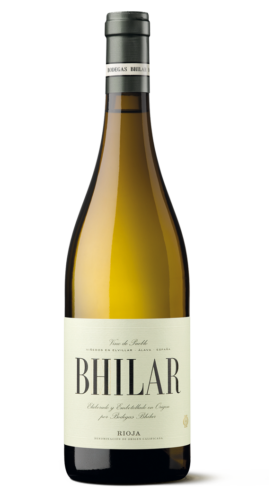
Bodegas Bhilar, Blanco 2020
93 points
Remarkable value from one of the best white wine producers
in Spain, this is a complex, effortlessly stylish blend of Viura
with 20% Garnacha Blanca. Subtle, leesy and very lightly
wooded, with notes of saffron, orange zest and quince, and
a tangy, refreshing finish. Drink 2022-2026 Alcohol 13%
Click here to read the original article
Click here to learn more about Bhilar

