


Style
Type
Still
Winemaker
Jeremy McKenzie and Josh Hammond
Appellation
Marlborough
Varieties
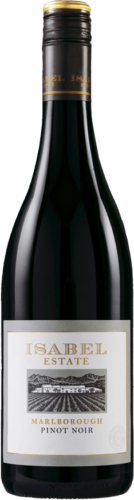
Pinot Noir
Viticulture
Densely planted vines, double the usual number in Marlborough, further contribute to the concentration of flavor in the fruit. Narrow row and close plant spacing increase competition creating small bunch and berry size for more flavor intensity and complexity.
Farming
Certified Sustainable
Terroir
The site benefits from all the climate characteristics that make the Marlborough renowned including extended sunshine hours combined with a long, cool growing season. Its soils are free-draining gravels with a narrow layer of tight clay in the subsoil that prevents excess water loss.
Vineyard
Isabel Estate is located in the Wairau Valley. Old, stony, sandy loam riverbed soils provide higher water retention than usual, while diverse aspects and rainfall create numerous meso-climates within this sub-region. Here there is a range of cooler, drier inland sites; barren stony, early-ripening sites; and sea breeze moderated coastal sites. Isabel Estate wines reflect the Wairau hallmark of fruit intensity and body. The Omaka River arises in the Southern Valley hills of South Marlborough. This is one of the drier areas of Marlborough where annual rainfall can be as little as 600mm. The Omaka River flows along the southern boundary of the Isabel Vineyard. This section of the vineyard produces fruit of a different level of intensity and complexity resulting in wines of distinction and supreme individual character.
Vinification
Each individual hand pick was stored separately to maintain individuality and selection opportunity for later blending. The fruit was fermented into 4-tonne stainless steel tanks with a significant portion of wild ferment. It was then held cold for seven days prior to fermentation to help extract flavour components and to enhance color stability. A selection of tanks contained 15-20% whole clusters, in which bunches were added to the fermentation to add a stem component and offer a further layer of complexity. The fermentation process transpired over 7-10 days at a temperature peak of 32°C where the wine becomes dry. Post this period the wines are left on the skins to macerate and develop supple sinew-like tannins before the wine was pressed, then transferred to oak.
Aging
Aged in a mixture of 35% new French oak and older seasoned 228-litre oak barriques. The barrels were regularly tasted during maturation until the desired balance and flavor profile was achieved. During this time in oak, the young wine completed natural malolactic fermentation. The wine was then carefully extracted from oak, blended and prepared for bottling.
Features
Screw cap
Available Sizes (L)
0.750
Distribution Area
New Jersey and New York
Shelf Talkers
- Isabel Estate Pinot Noir 2019-ST (WE)
- Isabel Estate Pinot Noir 2019-ST (VM)
- Isabel Estate Pinot Noir NV-ST
Tech Sheets
Tasting Note
Enticing aromas of red cherry, wild flowers and violets give way to hints of liquorice and cedar. The palate is concentrated and rich with notes of doris plum, black cherry, olives and dried herbs. Supple tannins give the wine a fine structure with great length and elegance. Attractive in its youth with fruit purity, but with potential to age and develop extra complexity over time.

2 Commerce Dr. Suite 3 Moorestown, NJ 08057
Office 800.245.0184
Fax 856.985.5848


