


Owner
Jean Brana
Winemaker
Jean Brana
Distribution Area
New Jersey and New York
Varieties
Cabernet Franc, Cabernet Sauvignon, Gros Manseng, Petit Courbu, Tannat
Vineyard
The appellation of Irouleguy stretches along steep hillsides in the Pyrenees within the French Pays Basque. The 605 acres/245 hectares are planted almost exclusively to red grapes. The vineyards which range in altitude between 200 and 450 meters can have inclines up to 70% and are often planted along narrowly cut terraces that require an enormous amount of hand labor. The characteristic soil of Irouleguy is a red sandstone that is rich in iron. This is complemented by a richer mix of clay/limestone and some outcrops of limestone. The vineyards face south and are protected by the surrounding mountain peaks from the wet weather coming off the Atlantic. The cool and wet springs are balanced by an “Indian summer” that allows the full ripening of the grapes into October.
Farming
Certified Sustainable


About Domaine Brana
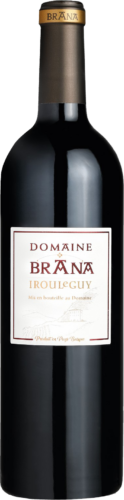
The Branas started as wine and spirits negociants in the Pays Basque in 1897, an activity that continues today. A few generations on, in 1974, Etienne Brana decided to plant a pear orchard and build a distillery in Saint Jean Pied de Port that would focus on distilling local fruits such as pears, plums and raspberries. Ten years later in 1984 and one hundred years after phyloxera ravaged the Basque vineyards, Etienne planted 20 hectares of vines, making the Branas the first in Irouleguy to replant on a meaningful scale. Tragically in 1992, the year before the completion of the Brana’s stunning winery, built into the steep hills above Saint Jean Pied de Port, Etienne died. He left his wife, Adrienne, and their two children, Martine and Jean, to carry on with his projects. Jean took over the vineyards and winemaking after studying oenology and then interning with Basque neighbor and winemaker at Chateau Petrus, Jean-Claude Berrouet. Martine took over the sourcing of fruit and the distilling. Most recently, in 2018 a new structure was built housing a new distillery and tasting room. The accomplishments of the Brana family are recognized not only in the Pays Basque, but internationally and their Eaux-de-Vies are considered among the best in France.
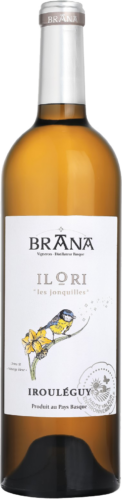
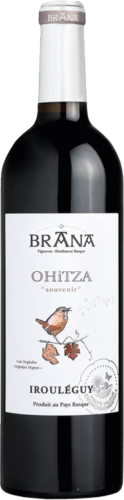
Jean Brana’s farming philosophy could be called bio-diverse. He gave up his certification of organic farming because the treatment of his vines required an application of copper that produced toxicity in his soils. He also abandoned most of the bio-dynamic remedies he employed, moving instead to a biodiversity that encouraged the natural flora and fauna to co-exist with the vines. The result has been the return of insects and birds that hadn’t been seen in the vineyard for years as well as one hundred and ten plant species that co-habit with the vines. To celebrate this development, Jean redesigned all the wine labels so that each one features one of the indigenous birds found in the vineyards.
Part of the Wine Traditions portfolio.

2 Commerce Dr. Suite 3 Moorestown, NJ 08057
Office 800.245.0184
Fax 856.985.5848


