


Style
Type
Still
Winemaker
Peio Espil
Appellation
Irouleguy AOC
Varieties
Cabernet Franc, Cabernet Sauvignon, Tannat
Viticulture
In an effort to preserve the traditions of the estate and respect nature, the vines are cultivated according to organic farming principles. Fertilization is primarily done with compost, and the application is not systematic; instead, it is done only as needed to enhance the natural expression of the soil. The vineyard rows are allowed to remain naturally grassy, with maintenance achieved through mowing during the spring and summer. In the autumn, sheep are used to graze the parcels as part of the maintenance process.
For treatments, the primary products used are sulfur and copper, which are applied minimally. Allowing weeds to grow alongside the vines helps to naturally maintain the soil's life, protecting it from the sun and harsh weather. This cultivation method is inspired by the principles of natural agriculture developed by Mr. Masanobu Fukuoka over the past 20 years. By leaving much of the work to nature and minimizing mechanical, human, and animal intervention, this approach aims to save energy and enhance the soil's capacity to express the terroir more fully.
Farming
Certified Organic
Terroir
Hillside clay & limestone
Vineyard
Irouleguy, a small appellation located in the Basque foothills of the Pyrenées in the extreme southwest corner of France, has long been dominated by the cooperative, producing 85% of the wine of the 175 hectare appellation. Over the past decade, a number of vignerons have left the co-op to produce their own wine. Today, there are 11 independent vignerons in Irouleguy. Domaine Ilarria has 10 hectares near the village of Irouleguy, less than 10 km from the border with Spain. The vines are mostly 20-40 years old, though some vines have reached 60 years of age. With most of the vineyards on very steep gradients of up to 60%, everything must be done by hand in these vineyards.
Vinification
To preserve the intrinsic qualities of grapes, the wines are worked as naturally as possible. Thus, all fermentations are made with natural yeasts and indigenous bacteria. No chaptalization, no de-acidification, or other chemical or technological intervention that can transform the original product.
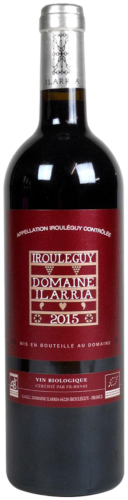
50% Tannat, 45% Cabernet Franc, 5% Cabernet Sauvignon
Aging
Aged on the lees for 16 months in barrel and stainless steel tanks. All of the red goes into 225L Bordeaux barrels. Every 3 months it is racked into stainless steel and then put back into barrel.
Features
Natural
Available Sizes (L)
0.750
Distribution Area
Delaware, New Jersey, New York, and Pennsylvania
Shelf Talkers
Tech Sheets

2 Commerce Dr. Suite 3 Moorestown, NJ 08057
Office 800.245.0184
Fax 856.985.5848


