


The 10 Best Dark Beers to Enjoy This Fall, According to Experts
Sep 26, 2025
Matt Allyn
The deep, complex flavors of porters, stouts, and dubbels make perfect pours as the days get shorter.
Dark beers get unfairly stereotyped by the loudest among them, like today’s trendy, Instagram-friendly pastry stouts. These are brawny, occasionally terrifying beers—like a 14 percent bourbon-barrel stout conditioned on Oreos. Beyond those sticky dessert brews, beer lovers are finally rediscovering a world of sudsy, nuanced flavor.
The disconnect between appearance and drinkability has long scared off casual drinkers too.
“There’s this myth that all dark beers are heavy,” says Max Finnance, who holds the beer industry’s highest professional certification: Master Cicerone. “But Guinness? It’s one of the lightest beers out there. Low ABV, smooth, and refreshing. It just doesn’t look like it.”
Brewers are starting to reintroduce classic dark beer styles like schwarzbiers and Czech dark lagers that you can actually drink on a hot day without feeling the need to nap afterward. There are flavorful, balanced options for everyday drinking.
In fact, when I reached out to several experts to ask what made a great dark beer, they all had the same basic answer: balance. That sounds boring, but it means you’re getting a more interesting, more complex beverage.
“In a dark beer, balance means you get more flavors to play with,” says Jeremy Kosmicki, brewmaster at Founders Brewing. He’s the man behind the brand’s vaunted Kentucky Breakfast Stout and a world-class porter highlighted below. “You’re balancing sweetness, bitterness, astringency, and giving every flavor a way to be showcased without stepping on the others.”
The result is beer that rewards both casual sipping and deep exploration. Whether it’s the toasted sourdough crust and dark chocolate of a porter or the clove and raisin of a Belgian ale, these beers deserve a spot in your regular rotation, not just on special occasions.
Now, before we dive into the best dark beers, here’s a quick explainer on the most prominent and influential styles.
Styles of Dark Beer
Porter
Born in 1700s London, porter was the first distinct beer style to be brewed on an industrial scale. Dark and roasty with flavors of coffee, cocoa, and toast, porters differ from stouts in that they’re typically a touch lighter in body, roasted character, and bitterness.
Stout
Bigger and bolder than porters by design, standard stouts lean into roasted barley with heightened bitterness and body. No other dark beer has such myriad variations: Milk stouts and pastry stouts use that bitterness to balance sweeter flavors while Irish dry stouts dial back the roast for a crisp and sessionable brew. Stout is less a style than a universe.
Black IPA
Looks like a stout, drinks like an IPA. The black IPA was born of the IPA explosion a decade ago as brewers explored new substyles. (Anyone remember brut IPAs?) After the fad crashed, the best examples of this beer that’s equal parts citrus hops and dark roasted coffee have, thankfully, reemerged.
Imperial Stout
This is dark beer turned up to 11. The imperial stout has long been a canvas for brewers to experiment with bourbon-barrel aging and unorthodox ingredients. Whether the beer in your hand has seen a Heaven Hill whiskey barrel or case of Kit Kat bars, or was left untouched, you can count on bold, dessert-like flavors that drink more like a port.
Doppelbock
Smooth, strong, and a touch sweet, this German lager was originally brewed by monks. It’s often called “liquid bread” for its hearty malted-barley character. Lacking roasted character, doppelbocks are rich with dark fruit and caramel.
Schwarzbier
The German black lager lands surprisingly light on the palate, with drinkability akin to that of a crisp pilsner with a roasted cocoa edge. It’s a pleasure to drink in any season.
Czech-Style Dark Lager
A classic dark beer for people who think they don’t like dark beer. This Czech lager is easy drinking, lightly sweet, and designed to be enjoyed by the half liter.
Dubbel and Quadrupel
These closely related dark Belgian styles—quads are stronger and a touch darker—are yeast-driven beers, where the big plum and baking-spice flavors are produced mainly by microorganisms rather than the barley or hops. Watch out: While complex, these are high ABV but deceptively drinkable.
Best Dark Beers
Rochefort 10
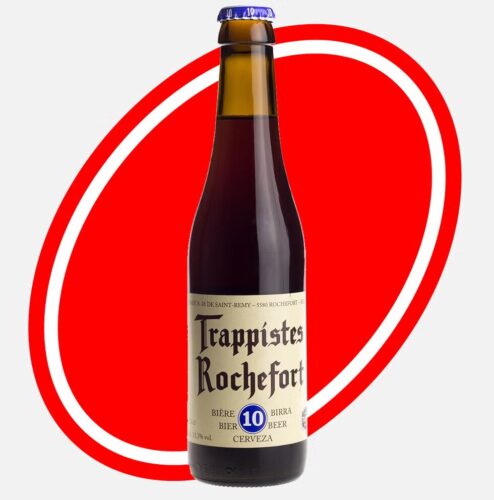
At over 11 percent ABV, Rochefort 10 is a contemplative beer that rewards slow sips.
When I asked Finnance for his desert-island dark beer, this Belgian quadrupel was the first he named. “It’s in the running for my favorite beer of all time,” he says. Brewed by Trappist monks, Rochefort 10 has a cola-like aroma with a blend of citrus, banana, and caramel. It’s smooth and warming on the palate, with cherries, dates, and brown sugar, and the body is subtly rich. Despite its 11.3 percent ABV, there’s no heat or bite. It’s a contemplative beer that rewards slow sips.
Ayinger Celebrator
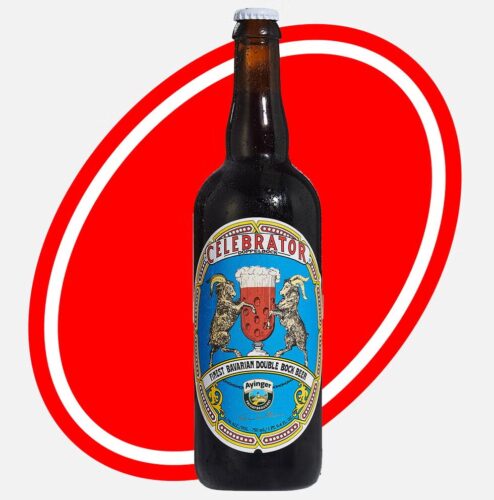
If you love German beer, get your hands on Ayinger Celebrator immediately.
Ayinger Celebrator might be the pinnacle of German beer. Flavors of bold candied berries, licorice, and dark chocolate are balanced by gentle, earthy hops—and there’s zero syrupy sweetness. It drinks smooth and creamy with just enough bitterness to keep the dessert-case flavors in harmony. It’s the benchmark for the doppelbock style and arguably the most drinkable iteration.
Westmalle Dubbel
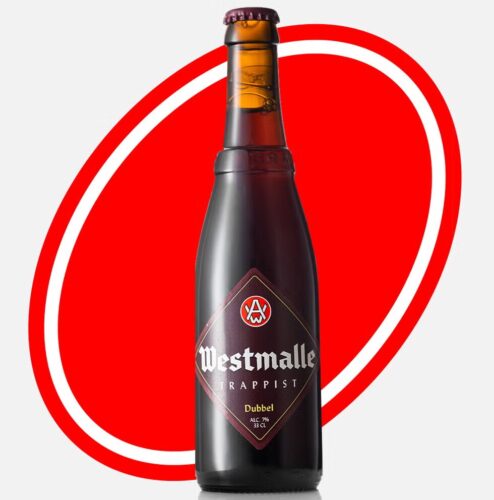
Westmalle Dubbel is a legendary brew in the dark beers category.
Westmalle Dubbel has been brewed by Trappist monks since 1856 and remains unmatched for depth and drinkability. The reddish-brown beer drinks lighter than it looks, more like a dry wine than a heady ale. You’ll get rum-soaked raisins, fig, and subtle strawberry-and-cream softness through the middle, followed by a peppery, surprisingly bitter finish. It’s a master class in balance: rich but not sweet, smooth but not boring. This beer defines the Belgian dubbel style.
Dark Beer FAQs
What makes a beer dark?
Dark beer gets its color, and much of its flavor, from the use of dark, roasted malted barley. Brewers add grains that have been kilned or roasted, much like coffee beans, to varying degrees. These specialty malts often make up a small percentage of the grain bill, but they deliver a big impact, lending the beer its signature notes of coffee, caramel, dark fruit, and chocolate.
Is dark beer stronger than light beer?
Often but not necessarily. Guinness is notably 4.2 percent ABV—the same strength as Bud Light—and many European dark lager styles like schwarzbier, Czech dark, and Munich dunkel average the standard 5 percent. Some dark styles were historically brewed stronger, like the doppelbocks and dubbels, at monasteries. However, there’s no relationship between strength and beer color.
Is dark beer healthier?
I hate to be a bummer, but beer only gets “healthier” as the alcohol and calories drop. Unfortunately, according to the World Health Organization, there’s no safe or healthy level of alcohol consumption. And while I have ample anecdotal evidence to suggest that moderate beer consumption is delicious and improves quality of life, don’t go fooling yourself into believing a phenomenal pint is anything but an indulgence.

