


words: Edward Deitch
photography: Jean-Jacques Cordier – adobe.stock.com
Published: June 18, 2025
Let’s clear up one thing from the start: Chablis is made from the Chardonnay grape in the Chablis region of Burgundy in France. This is the only bona fide Chablis. Other wines that use the name are, well, imposters.
Chablis is the northernmost outpost of Burgundy, more than 80 miles from Beaune, the center of the region’s wine trade and the vineyards of the famed Côte de Beaune.
As in most of the rest of Burgundy, Chardonnay is pretty much the only white grape grown in Chablis, while Pinot Noir is cultivated not far away in the neighboring Grand Auxerrois region.
In America, however, Chablis became, in part, a generic name for white wines that was borrowed — stolen, really — by some industrial-sized California wineries generations ago and is still used today. The name was grandfathered in for these wineries but cannot be used for new wines.
The confusion over just what Chablis is has abated but still persists among some. During a visit to Chablis last month and a deep dive into its wines, I heard more than one winemaker observe that some people “say they don’t like Chardonnay but they like Chablis.”
Today, Chablis occupies a unique and important place among white Burgundies, often at prices substantially below its counterparts from more high-profile appellations. In fact, Chablis is one of the best Burgundy values, offering crisp, mineral-driven Chardonnays with moderate alcohol. They deserve more attention.
And that goes for each of the four distinct Chablis appellations: Petit Chablis, Chablis, Chablis Premier Cru, and Chablis Grand Cru, all defined by where they are grown within Chablis, with the Premier and Grand Cru plots, or “climats” as they are called, occupying the best vineyard sites.
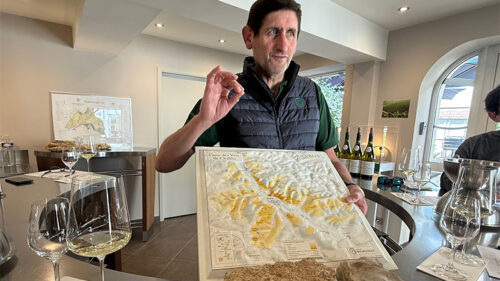
With the exception of Petit Chablis, the vines grow in the Jurassic-era Kimmeridgian limestone that largely defines the region and provides the wines’ signature minerality. Along with some clay, it is marked by tiny oyster shell fossils from the sea that once covered the area. It produces unique Chardonnays that are phenomenal partners to fish, shellfish, white meats, and cheeses.
Chablis is among the few places in the world where Chardonnay is grown in Kimmeridgian soil (nearby Champagne and the Loire Valley are among the others). It’s a fact highlighted by Didier Seguier, the winemaker at Domaine William Fèvre, before we taste the winery’s range of Chablis. “When you drink Chablis, you don’t drink Chardonnay,” he says proudly. “You drink Kimmeridgian — and the freshness, the salinity, the minerality from the soil, from the Kimmeridgian.” It could be the region’s mantra.
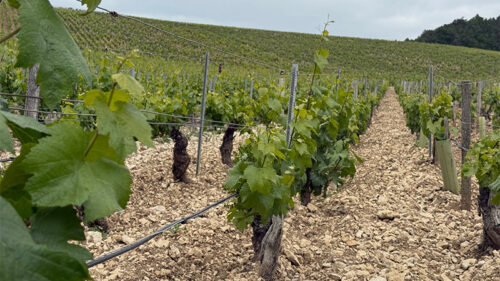
As for Petit Chablis, the wines are deservedly getting more attention among producers and wine drinkers. With its name, it has suffered from the perception of being a “smaller” or “lesser” wine, while in fact it is just different. The vines grow mainly on the region’s higher slopes or plateaus in Portlandian limestone, which is harder than Kimmeridgian and doesn’t retain water as well.
“The vines ripen very quickly and you have a different Chardonnay,” Sandrine Audegond, a Chablis wine expert, explains as we stand above some of the region’s most famous vineyards. “And that’s why you have lovely fruit, but not the same length and depth or mouthfeel you can have in Chablis, Premier Cru, or Grand Cru.”
And yet, with its affordable prices, absence of oak (but with aging on the lees to balance its acidity), combined with growing consumer interest in leaner wines, Petit Chablis is a wine of the moment — “because it’s so lively. It’s never buttery and fat and oaky,” Audegond says. “It’s not Sauvignon, but it’s almost a Sauvignon-like Chardonnay.”
Where oak is used — in some Chablis and more so in Premier Crus and Grand Crus — it is done so in moderation, typically with only a relatively small part of the wine aged in barrels. “If we use 50, 60, or 70 percent oak for aging, there is too much rouge on the face,” Audegond says with a characteristically French comparison. “It doesn’t fit the style because our wines are lighter.” She continues: “Côte de Beaune makes ‘Romeo’ wines. We make ‘Juliet’ wines. It’s not the same style.”
Paul Espitalié, general manager of Maison Simonnet-Febvre, says over lunch that Chablis is the right wine at the right time. “We are very lucky people are looking for our style of wine,” he says. Adds his colleague, Jean-François Bordet, owner of Domaine Seguinot-Bordet and co-president of the Chablis Commission, “More and more customers want to drink white wine and fresh wine.”
Being the coolest part of Burgundy, some in Chablis are not overly concerned about climate change, at least not yet. Olivier Masmondet, export director of La Chablisienne, the large Chablis cooperative, is frank about it. “Chablis has gained positively from global warming because it makes the wine more accessible,” meaning rounder and richer, he says. Largely gone are the days, he adds, when some Chablis wines were green and overly acidic.
But because of its location in the north of Burgundy, “we manage to keep a freshness” that other parts of Burgundy may now be struggling with, says Lucie Thieblemont, who runs Domaine Charly Nicolle with her husband.
If you look at a map of the region, you’ll see that most of the vineyards – there are about 14,500 acres under vine — are classified as Chablis or Petit Chablis on both sides of the Serein River, followed by 17 main “climats,” or specific vineyard sites, classified as Chablis Premier Cru and a mere seven as Grand Cru, all in one small area on the right bank of the river.
While prices of Chablis have increased in recent years, they have not done so as much as wines from the Côte de Beaune, especially at the Premier and Grand Cru levels. That affordability is something consumers should cheer about as more of them discover, or rediscover, this important yet still under-the-radar corner of Burgundy.
Because of their availability and more modest prices, I’ve focused on Chablis in the list below, with a few examples of the Premier and Grand Cru wines and Petit Chablis.
Here are 17 of the best wines from Chablis:

There’s a nice richness to this Chablis that opens with aromas of wet stone, grapefruit, and stone fruits. Floral and herbal notes emerge along with a saline touch on the long finish. A classic Chablis.
Click here to read the original article
Click here to learn more about Domaine Ellevin

